
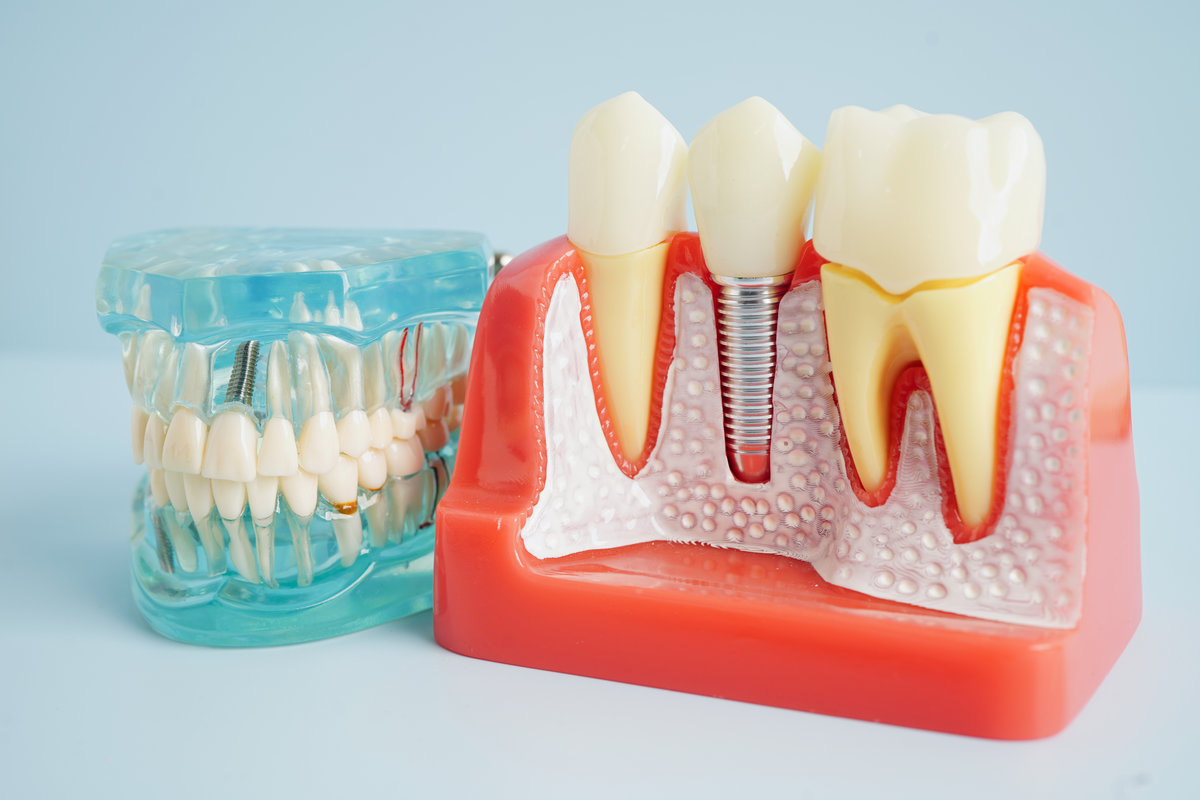

If you’re weighing your options for replacing one or more missing teeth, the good news is that you may have more solutions than ever. The hardest part is figuring out which one fits your life. How many teeth you’re missing, whether you have adequate bone density, your budget, and other lifestyle considerations will all determine whether you should opt for implants, dentures, or bridges.
Our doctors work closely with each patient in Panama City to find the tooth replacement option that best fits their health, goals, and budget. Whether you’ve been researching dental implants or are just starting to explore your choices, this guide breaks down the three most common options, what each involves, when each is typically recommended, and how the process works, so you can walk into your appointment already feeling informed.


How Tooth Replacement Works: What Happens After You Lose a Tooth
When a tooth is lost, the bone that once supported its root begins to resorb because it no longer receives the everyday pressure of chewing. Over months and years, this can change the shape of your jaw and the fit of any surrounding teeth. That is why timing matters. Patients in Panama City who come in soon after a tooth is lost, rather than waiting, typically have more options and better long-term outcomes, since less bone has had a chance to break down.
The three replacement paths below approach that problem differently. Implants replace the root itself. Bridges and dentures replace only the visible tooth. Which approach makes sense depends on how many teeth are missing, how much bone remains, and what you want day to day.
Understanding Your Three Main Options
Each tooth replacement solution works differently and serves a different set of needs. Here’s what you need to know about each one, including what it is, when it’s typically recommended, and how the process works.
Dental Implants
What it is: An implant is a small titanium post set into bone, where it acts as the root of a tooth. Once healed, a crown is attached on top that looks and acts just like a tooth.
When it’s recommended: Single dental implants are best for patients who have lost one tooth and want a stand-alone replacement that doesn’t involve the surrounding teeth. Implants generally require adequate jawbone density, so patients who have been missing a tooth for a long time may need a bone graft first. Implants are considered the most durable and long-term tooth replacement option currently available. Research published by the National Institutes of Health found that dental implant survival rates exceed 90% even after 10 years, with some studies showing strong outcomes well beyond that window.
How the process works: After a consultation and imaging to confirm bone density, the implant post is placed and given time to fuse with the jawbone, a process called osseointegration that typically takes a few months. A custom crown is then attached on top. Because the implant integrates with bone, it helps preserve bone density that would otherwise deteriorate after losing a tooth. For many patients, the longer timeline and long-term results are well worth the investment.
Dental Bridges
What it is: A traditional dental bridge spans the gap left by a missing tooth by anchoring to the healthy teeth on either side. Those anchor teeth are prepared to support crowns, which hold the artificial tooth in place.
When it’s recommended: Bridges work best when the teeth on either side of the gap are healthy and strong enough to support crowns. They’re a good fit for patients who prefer to avoid implant surgery or who may not currently qualify for it due to bone loss or other health factors.
How the process works: Bridges are a non-surgical, quicker option that can typically be completed in fewer appointments and at a lower upfront cost than implants. The anchor teeth are reshaped to accept crowns, an impression is taken, and the finished bridge is cemented into place once it’s fabricated. The tradeoff is that the anchor teeth require permanent reshaping, and bridges don’t stimulate the jawbone the way implants do. They remain a reliable, long-standing solution that many patients find comfortable and natural-looking.
Dentures
What it is: Dentures are removable appliances that replace several missing teeth or a full arch. Traditional dentures rest on the gum tissue and are held in place by suction or adhesive.
When it’s recommended: Dentures are typically the most accessible option in terms of upfront cost and are a practical solution for patients who have experienced significant tooth loss across an arch. One limitation is that traditional dentures don’t prevent bone loss in the jaw over time, and they can shift slightly when eating or speaking, which some patients find frustrating.
How the process works: Impressions are taken of the gums and any remaining teeth, and the denture is custom fabricated to fit your bite. For patients who want the stability of implants combined with the coverage of dentures, implant-supported overdentures are an increasingly popular middle ground. A small number of implants anchor the denture in place, dramatically improving retention and function without the need to replace every missing tooth individually.
Implants vs. Bridges vs. Dentures at a Glance
| Factor | Dental Implants | Dental Bridges | Dentures |
|---|---|---|---|
| Missing Teeth | Best for single-tooth loss | Best for one or a few adjacent teeth | Best for several teeth or a full arch |
| Jawbone Requirement | Requires adequate bone density, or a bone graft first | Requires healthy anchor teeth, not bone density | No bone density requirement |
| Timeline | Several months, including healing time | A few appointments over a few weeks | A few appointments for impressions and fitting |
| Bone Preservation | Yes, stimulates the jawbone like a natural root | No | No, unless implant-supported |
| Upfront Cost | Higher upfront, less long-term maintenance | Moderate | Typically the most accessible upfront |
These factors are a starting point. Your overall health also matters. Certain medical conditions or medications can affect candidacy for surgical procedures, and the only way to know what’s right for you is through a thorough exam and a conversation with your dentist.
What to Expect During Your Consultation at Marina Pointe Dental
Deciding between implants, bridges, and dentures starts with an exam, not a guess. Here’s how that visit typically goes for Panama City patients.
- Exam and imaging: Our doctors examine the gap, the surrounding teeth, and take imaging to assess your jawbone density and overall oral health.
- Discussion of goals and budget: We walk through how many teeth are missing, your timeline, and your budget, since all three factor into which option fits.
- Personalized recommendation: You leave with a clear recommendation, an honest look at the tradeoffs, and a treatment plan, not a one-size-fits-all pitch.
As a family-owned practice rooted in Panama City, we’re not rushing patients through decisions. We walk through your options with you, explain the tradeoffs honestly, and build a treatment plan that makes sense for your specific situation.
How Insurance and Financing Work for Tooth Replacement
Marina Pointe Dental is a PPO practice that works with most major dental insurance plans, and our team handles verification and claim submissions on your behalf. For patients without insurance, we offer financing through CareCredit, Cherry, and Sunbit, as well as an in-house membership plan with discounted access to care. Every treatment plan for implants, bridges, or dentures includes a clear breakdown of cost and coverage before you commit to anything. See our full financing and insurance options for details.
Frequently Asked Questions
What is the main difference between implants, bridges, and dentures?
Implants replace the tooth root and the crown, bridges anchor a replacement tooth to neighboring teeth, and dentures are removable appliances that replace several teeth or a full arch. Each affects your jawbone, timeline, and cost differently.
When is a dental implant not recommended?
Implants generally require adequate jawbone density. Significant bone loss, uncontrolled diabetes, or smoking are among the most common factors that can affect candidacy, though a bone graft can sometimes make implants possible later.
How long does each option take from start to finish?
Dentures and bridges are typically completed within a few appointments over a few weeks. Implants take longer, often several months in total, because the post needs time to fuse with the jawbone before the final crown is attached.
Does insurance cover dental implants, bridges, or dentures?
Coverage depends on your specific plan and which option you choose. Marina Pointe Dental accepts most major PPO insurance plans and also offers CareCredit, Cherry, and Sunbit financing, along with an in-house membership plan for patients without insurance.
What if I’ve been missing a tooth for a while and have bone loss?
A bone graft can often rebuild enough density to make an implant possible. If that timeline or cost doesn’t fit your situation, a bridge or denture may still be a strong option depending on the condition of your remaining teeth.
How do I know which option is right for me?
The right choice depends on how many teeth are missing, your jawbone condition, your overall health, and your budget and timeline. A consultation and exam at Marina Pointe Dental is the only reliable way to know for certain.
Find the Right Fit at Marina Pointe Dental
Our doctors take the time to understand what you want from your smile and what your oral health needs most. As a family-owned practice rooted in Panama City, we’re not rushing patients through decisions. We walk through your options with you, explain the tradeoffs honestly, and build a treatment plan that makes sense for your specific situation.
If you’re ready to take the next step toward a complete, confident smile, we’d love to hear from you. Contact our office to schedule a consultation and find out which tooth replacement option is the right fit for you.